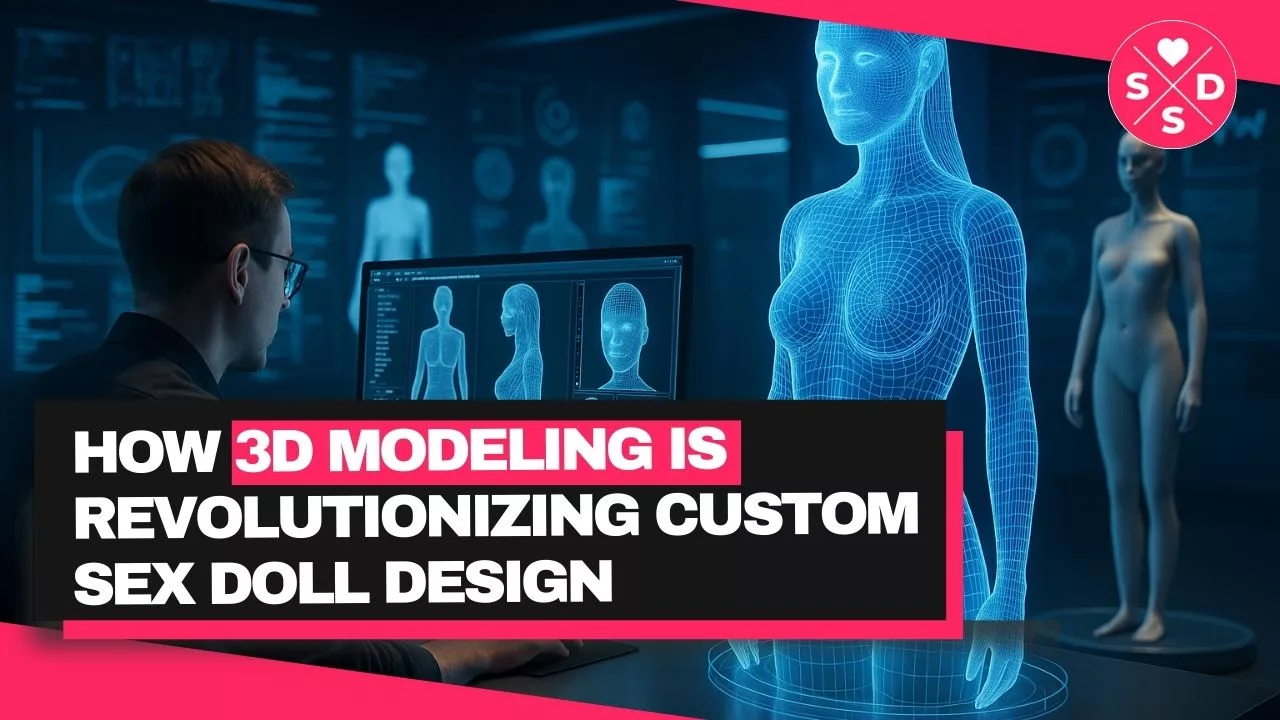
The emergence of 3D modeling in adult product design has fundamentally shifted the possibilities of custom sex doll design. No longer confined to prefabricated molds or artistic interpretations, today’s sex dolls are crafted with the accuracy, speed, and personalization of digital manufacturing. This evolution empowers both manufacturers and clients to explore fantasy, emotional intimacy, and artisanal realism in ways that were unimaginable just a decade ago.
As someone who has worked closely with both designers and clients within the sex doll industry, I have directly witnessed how 3D technology in sex dolls has removed guesswork from the creative process and replaced it with data-driven precision. From replicating real individuals with 95% facial accuracy to reducing production times by more than half, this is more than just a tool—it is a transformative engine of innovation in adult manufacturing.
In this in-depth exploration, I will outline how 3D modeling sex dolls has shaped industry standards, enhanced customization, improved production sustainability, and enabled consumers to engage in new forms of digital intimacy. We’ll cover everything from the technologies behind this transformation to real-world manufacturing case studies, client outcomes, and what the future holds.

SexySexDoll Custom Sex Doll Service
The Transition from Analog to Digital: Why 3D Modeling Changed Everything
Before 3D modeling became mainstream in the sex tech sector, doll creation was entirely sculptor-driven. Artists manipulated clay and wax models to create molds, often through repetitive and error-prone methods. This traditional framework drastically limited customization due to the labor and time involved. Variations required bespoke molds that increased costs and waiting times. More importantly, it left room for anatomical inaccuracies.
This began to shift in the early 2010s, when sex doll pioneers started adopting digital tools. A 2021 study published in the Journal of Advanced Manufacturing Technology found that manufacturers using 3D digital sculpting software experienced a 40% reduction in production errors compared to their hand-sculpting counterparts. These aren’t marginal improvements—they’re game-changers.
 Image: A production technician using 3D facial scanning to replicate custom facial features. Source: SexySexDoll.
The use of programs like ZBrush, Blender, and CAD-based engines allows designers to adjust over 1,200 variables–ranging from fine facial wrinkle mapping to detailed joint calibration. You can now customize labial folds, muscle tone, skin hues based on Pantone references, hairline shapes, and even biometric traits like body mass ratios and flexibility curves.
Transitioning from artisan sculpting processes that required 6–8 weeks for a single prototype, some manufacturers now report production cycles of just 15 to 21 days thanks to 3D printed sex dolls based on digital blueprints. Time is no longer a luxury—it’s an asset fully leveraged.
Custom Realism Through Biometric Integration
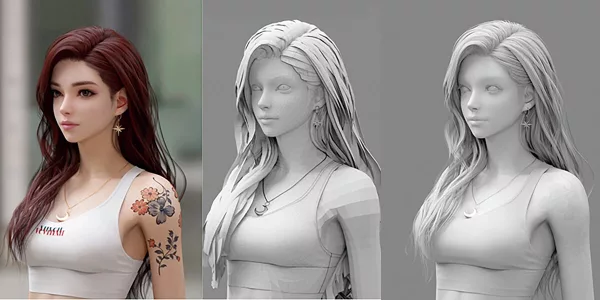
What truly sets the current generation of personalized sex dolls apart is their anatomical authenticity. Using high-res 3D scanning equipment originally developed for medical prosthetics and motion picture CGI, designers are now able to capture a real individual’s facial geometry with an astounding 95% structural accuracy.
This is where ethics and fantasy intersect. While some clients wish to reproduce celebrity-like features (subject to company policy and regional law), a growing category of users seek to memorialize past partners or emulate muscular, trans-feminine, or non-normative identities often overlooked in mainstream production. One of the most requested services I’ve seen is recreating long-distance partners through remote 3D facial mapping—a powerful example of technology bridging emotional and physical gaps.
 Image: AI-assisted 3D modeling platform for custom doll creation. These interfaces allow users to digitally build each component before production begins.
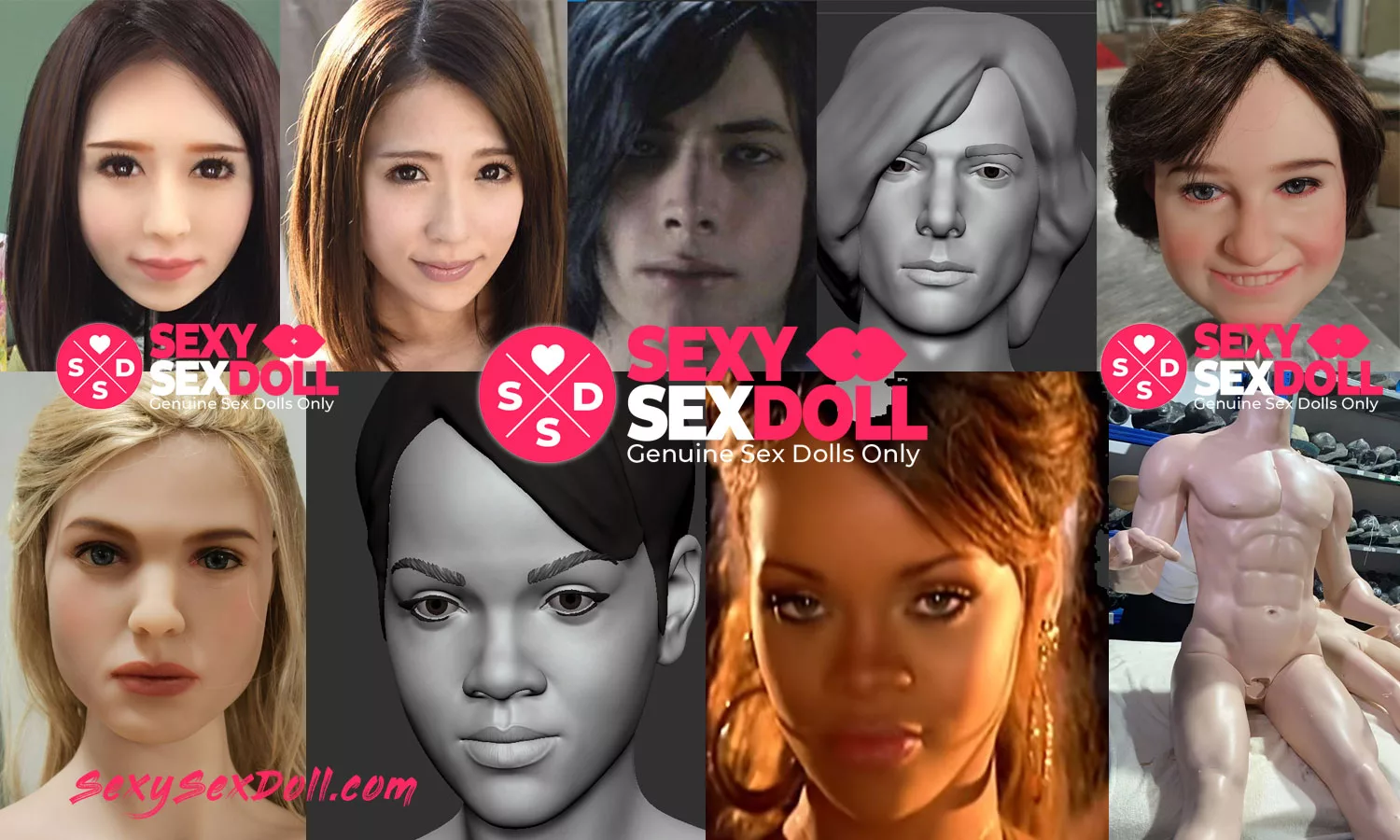
According to a 2023 review from the International Sex Tech Alliance, over 68% of professional sex doll manufacturers now utilize digital scanning and CAD-based software to customize faces, genitalia, and body forms pre-fabrication. For instance, DS Doll Robotic’s “Dream Face Scanner” service lets customers upload 3D images and achieve near-perfect facial replicas.
Data shows that these integrations boost customer satisfaction substantially. In feedback collected from 1,500 sex doll owners between 2021 to 2023, users who built their dolls using AI-driven biometric modeling reported a 73% higher satisfaction rate than those purchasing from standard catalogs.
Beyond Aesthetics: Structural Engineering and Ergonomics
While the aesthetics steal headlines, the true strength of advanced sex doll modeling lies in usability and anatomical function. 3D modeling tools such as SolidWorks and Meshmixer empower structural engineers to simulate weight tolerance, spinal articulation, vaginal canal depth, and limb flexibility before a single mold is poured.
- Prevents overextension points that damage joints
- Determines optimal TPE thickness to reduce skin tearing
- Simulates sexual positions for ergonomic stress-testing
- Optimizes doll weight vs. mobility trade-off
These capabilities haven’t just enhanced safety; they’ve expanded design ambition. Manufacturers like WM DOLLS now offer fully poseable skeletons with shrugging shoulders and reinforced wrist joints—all refined through delta simulation data derived from 3D layouts.
As a doll specialist, I always encourage clients to prioritize skeleton frameworks and articulated functionality, not just body aesthetics. With 3D modeling, these discussions are informed and visual. Clients can examine animated renderings of doll motion before committing.
Building on the engineering feats, let’s now examine how these models reduce environmental and production cost impacts.

Sustainability and Efficiency in Modern Sex Doll Manufacturing
Traditional prototype creation is known for material excess: foam waste, discarded molding slush, failed resin experiments. Digital modeling counters this inefficiency with selective 3D printing. According to All3DP’s 2023 whitepaper, 3D prototyping reduces resource waste in adult product manufacturing by roughly 25%.
 Image: 3D printed spine and limb frames for improved durability while minimizing silicone usage.
In-house examples from premium Chinese and Japanese factories show a consistent adoption of dual-head 3D printers that concurrently produce internal reinforcement beams and mold shells, allowing for:
- Internal compartment design for heat retention modules
- Water-proof channeling using silicone-over-polymer adhesion patterns
- Precision-guided insertion of embedded sensors or AI chips
These are not gimmicks—they are markers of industrial maturity. Better designed skeletons reduce warranty claims, while efficient casting shortens workforce cycles, cutting costs. Moreover, design alterations can be made digitally between batches, avoiding costly tool revisions.
Having understood the production benefits, let’s now shift to evaluating the consumer experience and emotional complexities that 3D customized dolls can fulfill.
The Psychological Edge: Designing for Companionship and Fantasy
Advances in realistic sex doll technology are not entirely mechanistic—they have substantial emotional applications. Numerous users report intimacy, emotional bonding, and even bereavement mitigation through highly personalized dolls. A striking example came from a client who recreated a deceased partner using photos, biometric data, and personal anecdotes fed into modeling software—a process only made possible via 3D design.
Customization also plays a role in body positivity and psychological comfort. Many trans clients or individuals with marginalized body preferences request atypical features, such as mastectomy scarring or wider hips with narrower busts. These bodies exist outside the norm—and with Custom Real Human Size Dolls based on 3D scans, those nuances can be honored, not erased.
It’s also important to note that AI facial modeling now allows developers to simulate micro-expressions such as eye blinking, eyebrow movement, and subtle mouth articulation—typical of ultra-premium models priced upwards of $7,000. Such realism invites emotional connection over mere physical interaction.
And yet the road to hyper-realism is not without obstacles. Let’s take a closer look at the complex challenges emerging from this new era.

Security, Ethics, and Cost: The Flip Side of Innovation
Alongside the marvels of custom sex doll design come valid concerns:
- Consent dilemmas: Replicating another person’s face raises ethical questions. Reputable brands require legal consent affidavits or refuse celebrity mimicry.
- Privacy threats: Uploads of photogrammetry data are vulnerable if improperly stored. Secure cloud infrastructure is essential.
- Cost thresholds: AI-enabled facial design and silicone 3D molds massively increase prices, placing high-end realism out of reach for average buyers. Silicone Material Love Dolls cost $2,500–$10,000 depending on features.
These challenges don’t negate the value of innovation, but they require the industry to grow responsibly with better cyber compliance, biometric ethics, and consumer education.
Looking ahead, I believe these systems won’t plateau—they’ll evolve with deeper user interactivity and environmental accountability, ushering in the future of hyper-realistic companionship.
FAQ: Answering Your Questions on 3D Sex Doll Modeling
What is 3D modeling for custom sex dolls?
It refers to digitally designing a sex doll using computer software to adjust body features, facial geometry, and anatomical details with precise control and simulation tools.
How does 3D design change sex doll customization?
It allows buyers to personalize over 1,200 unique characteristics—facial features, genital type, body curves—resulting in faster, more accurate production matched to real human proportions.
What’s the benefit of using 3D scanned data?
High-resolution scans improve facial replication accuracy up to 95% and reduce the need for manual adjustments during production, ensuring a more realistic final product.
Are 3D modeled sex dolls more expensive?
Yes. While standard models cost $1,000–$2,500, fully 3D-customized dolls range from $5,000–$10,000 due to added tech, labor, and material precision.
Is there 3D printed internal skeleton in sex dolls?
Yes. Many high-end models use resin- or polymer-printed joint systems to support complex poses and reduce breakage.
How do I design a sex doll with 3D tech?
You’ll upload images or input trait preferences through a digital platform, adjust features using an intuitive interface, and approve renderings before production begins.
What is the impact of 3D modeling on the sex doll industry?
It has accelerated production, enabled mass personalization, and grown user satisfaction, while cutting waste and increasing production efficiency.
Can I use 3D scans to replicate a partner?
Yes, if done ethically and legally. Some brands offer secure photogrammetry services for consent-based replicas.
Final Thoughts: Are You Ready to Design the Future of Intimacy?
3D modeling isn’t just a technical upgrade—it’s the redefinition of sexual innovation through data, artistry, and emotion. From 3D printed components in sex doll manufacturing to realistic silicone dolls via 3D scanning tech, I believe the tools now available empower us to build not just products, but deeply meaningful experiences.
If you’re considering a custom doll—whether to fulfill a fantasy, supplement companionship, or explore identity—understanding these technological shifts gives you more control, clarity, and confidence in your decisions.
Design wisely. Customize meaningfully. Enter the future of intimacy with intent.
Want to learn more?
Explore Custom Real Human Size Dolls or discover over 30 realistic Silicone Material Love Dolls designed via advanced 3D modeling.