UBTECH’s UWORLD U1 Puts a Face on Emotional AI — What It Means for the Companion-Doll Market
A Hong Kong-listed robotics giant just launched a life-size, silicone-skinned humanoid built entirely around emotional companionship — and 13,000 pre-orders arrived before the presentation lights went dark. As an authorized multi-brand doll retailer since 2016, we’ve watched this space converge for years. Here’s the unfiltered read on what UBTECH’s UWORLD U1 actually signals — for the technology, for buyers already in the market, and for the broader question of what “synthetic companionship” is becoming in 2026.
What Is the UBTECH UWORLD U1, and Why Does It Matter Right Now?
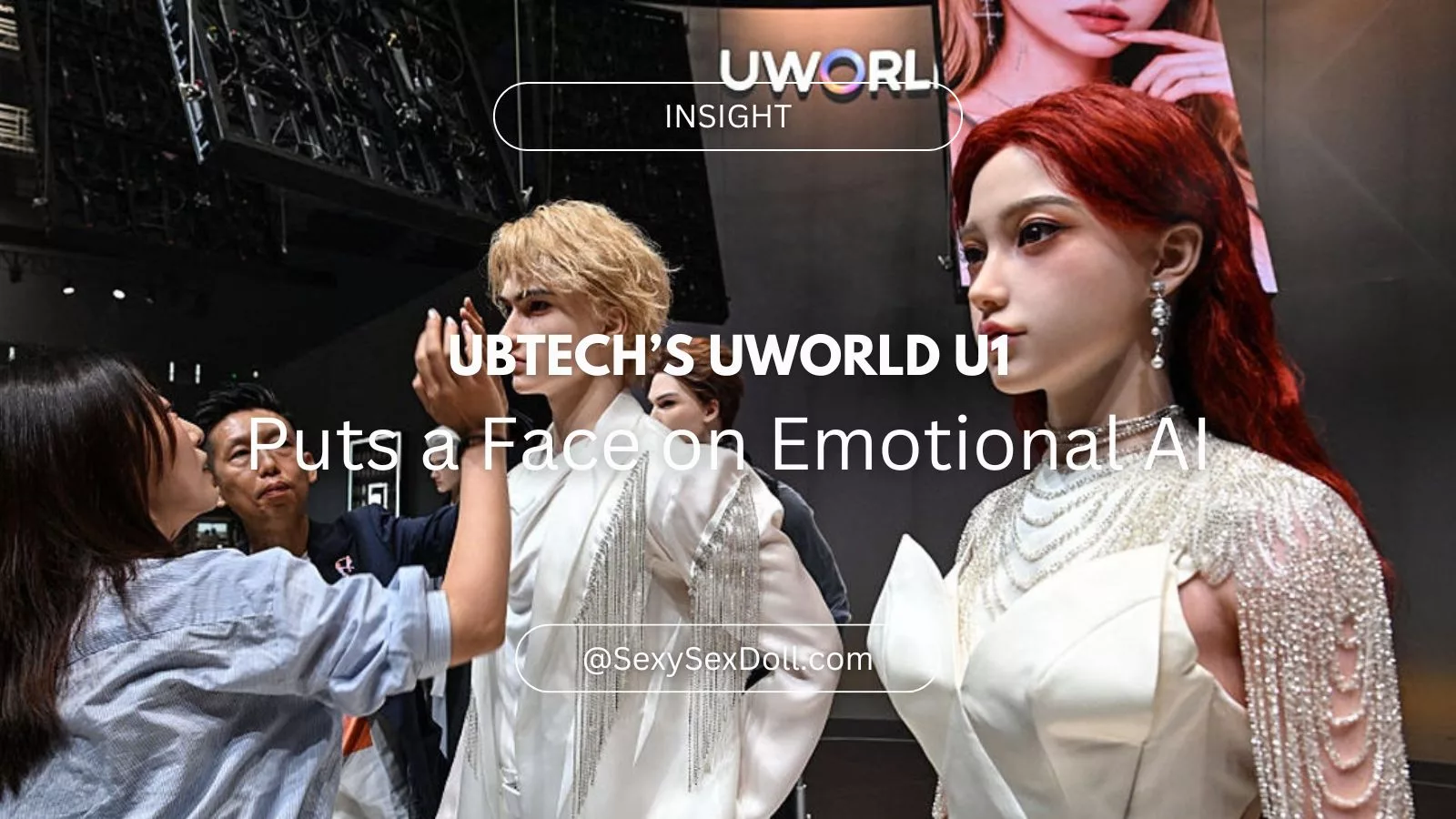
On June 30, 2026, at a high-profile launch event in Shenzhen, UBTECH Robotics — recognized as the world’s first publicly traded humanoid robot manufacturer — unveiled a consumer humanoid designed for personal companionship, featuring lifelike silicone skin and emotional artificial intelligence, as Chinese tech firms increasingly transition robots from the factory floor to the family living room.
This isn’t a prototype. It isn’t a Kickstarter. Building on its industrial robotics business, UBTECH ranked first globally in revenue and sales volume from full-sized embodied intelligent humanoid robots in 2025, and launched UWORLD in 2026, extending its robotics portfolio into the consumer market. That industrial credibility is the first thing that separates this from the parade of vaporware companion-robot announcements that have come before it.
Unveiled with the thematic tagline “Love is eternal,” the UWORLD U1 series features life-sized, soft-touch humanoid robots available in both male and female versions. The U1 series comes in three versions: the U1 Lite (a semi-torso edition), the full-body U1 Pro, and the highly dynamic full-body U1 Ultra. All robots have a human-like appearance and are available in female and male forms. The female robots stand 168 cm tall and weigh 35 kg, while the male variants stand 183 cm tall and weigh 42 kg.
The model is available in Lite, Pro, and Ultra variants, priced from 119,800 yuan (approximately US$17,650) to 990,000 yuan. To put that in Western retail terms, multiple industry reports have estimated the UBTECH U1 Pro cost at approximately $35,000 USD — comparable to the price of a new car and positioned below high-end enterprise humanoid systems.

The demand signal is hard to ignore. UBTECH’s founder and CEO said the company had already logged more than 13,000 orders for the U1 series, with pre-orders drawing over one million page views on JD.com. Delivery for early orders in China is slated for mid-September 2026. These are company-reported figures — not independently verified shipment data — but even as a directional indicator they represent a meaningful market validation for a category that barely existed twelve months ago.
The Tech Stack, Honestly Assessed
We’ve been covering robot and AI companion technology here long enough to distinguish a genuine engineering milestone from a marketing stack of buzzwords. The U1 is a mix of both, and buyers deserve to know which is which.
The Hardware: What’s Real
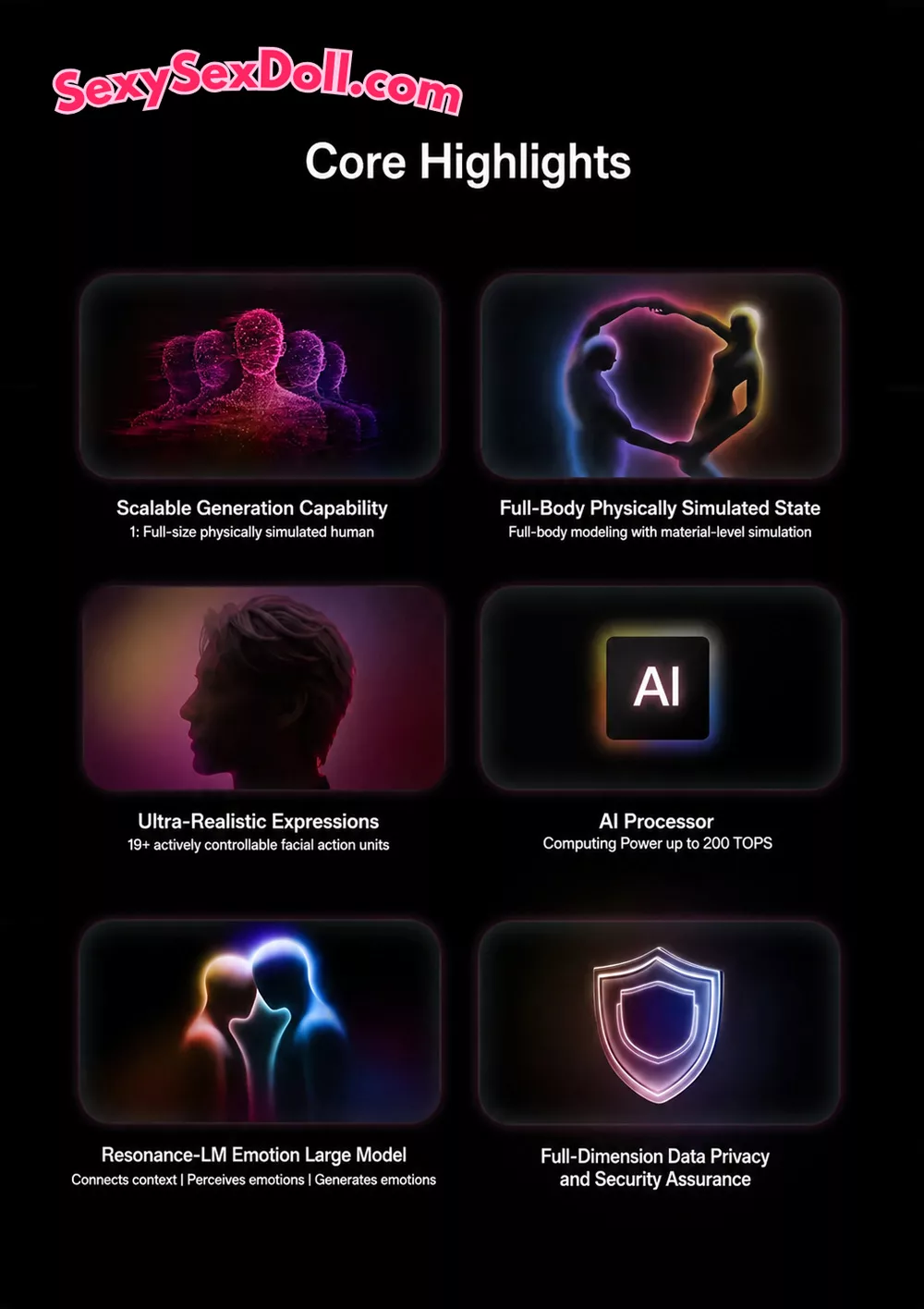
The UWORLD U1 Series is built on UBTECH’s proprietary end-to-end technology stack, integrating biomimetic skin, embodied intelligence hardware, an operating system, emotion-driven large language models, and system-level manufacturing to improve the real-world deployment of humanoid robots.
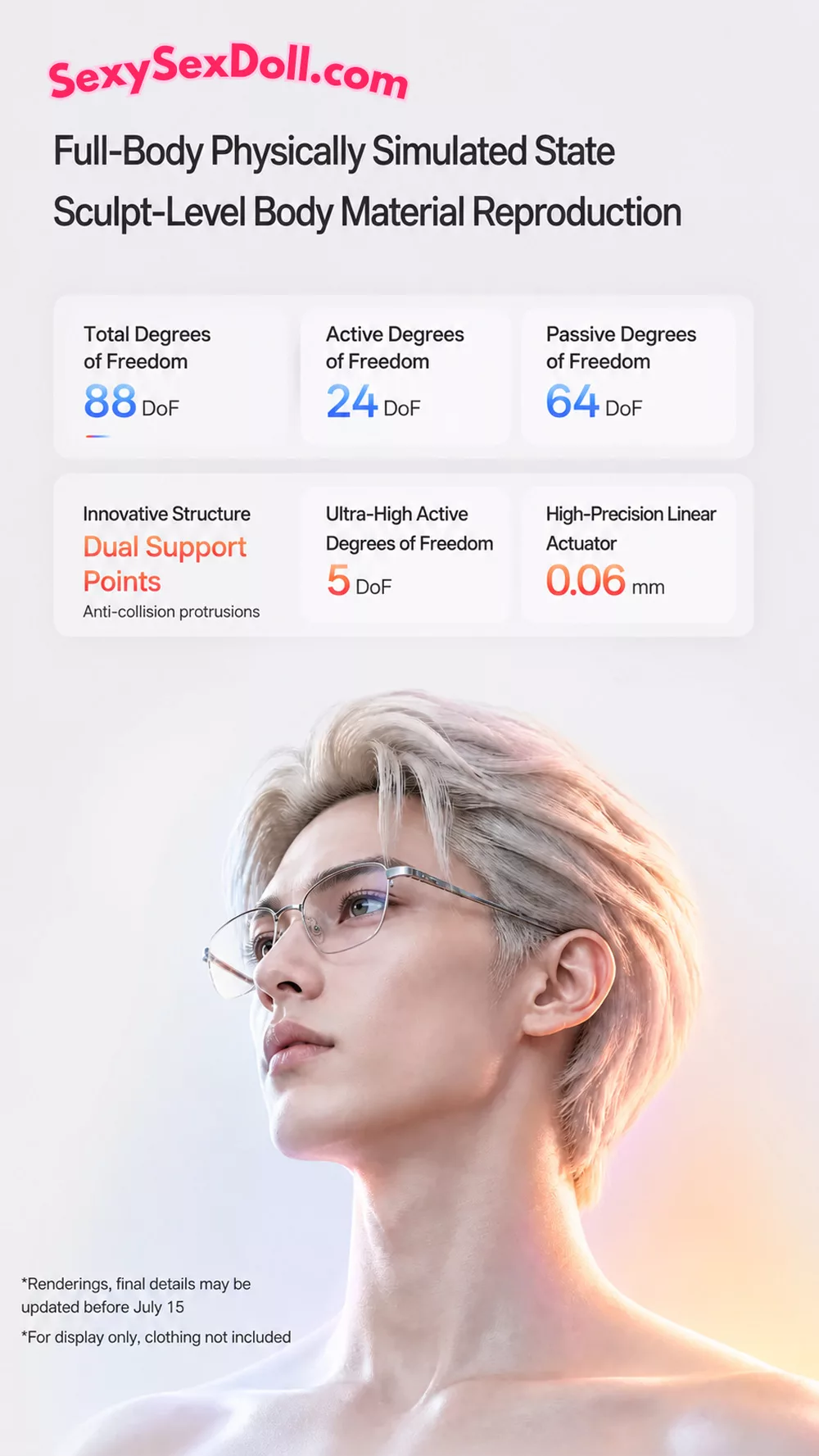
The full-size humanoid features 88 degrees of freedom and a dual-pivot biomimetic cervical spine that enables it to reproduce up to 90 percent of fundamental human movements. That DOF count is meaningfully high — it translates into blinking eyes, nuanced head tilts, and upper-body gestures that track closer to human movement than anything in a factory robot. Designers went to considerable measures to make the robots appear realistic, giving them silicone skin with characteristics including pores, veins, and fingerprints.
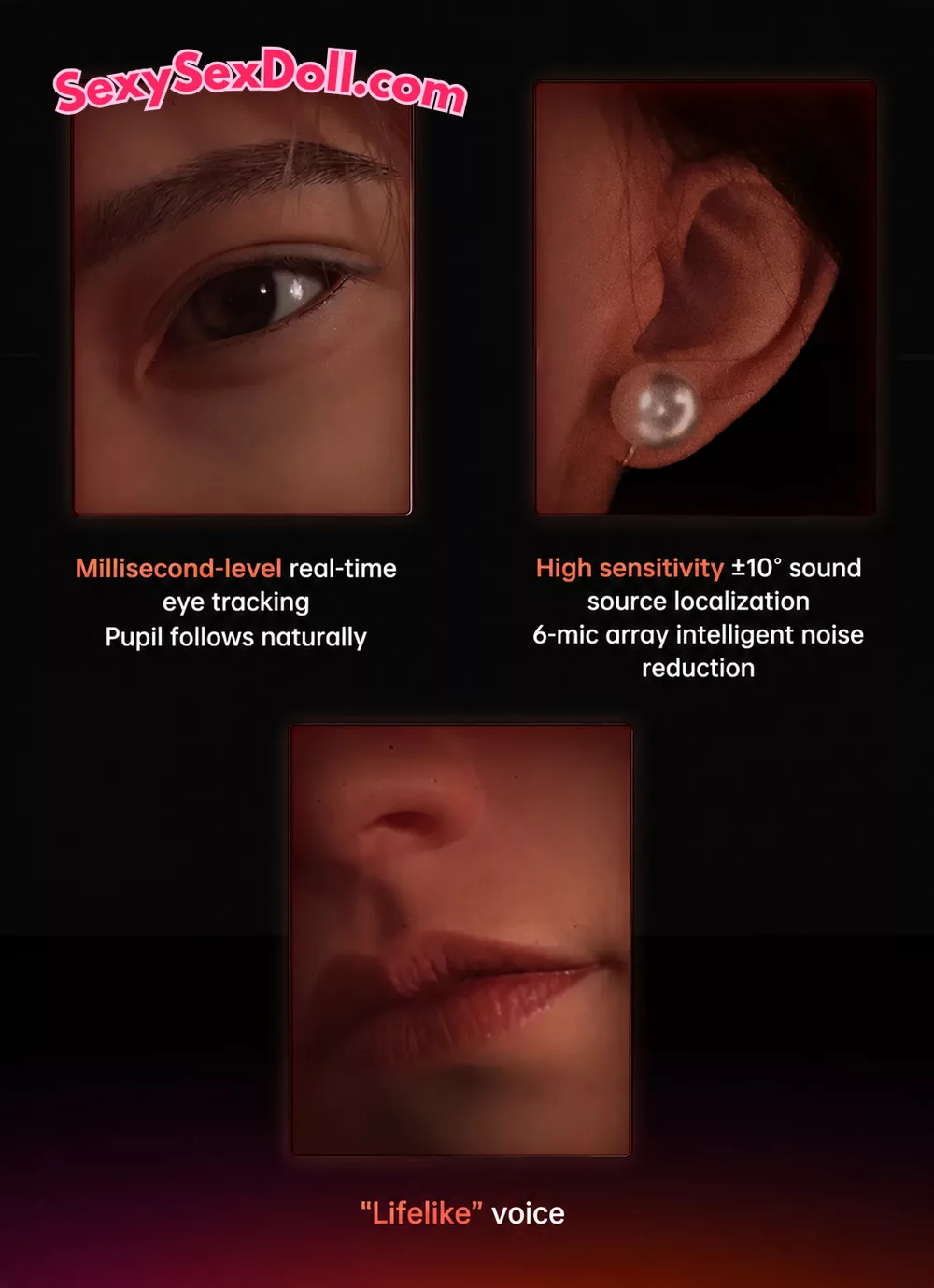
The tactile reality, though, is more complicated. The U1 has silicone skin — those who’ve touched it say it feels just like human skin, “but cold.” That single detail — cold silicone — matters enormously to buyers who’ve shopped premium TPE or platinum silicone dolls. The warmth of a body is a deeply embedded cue for comfort and intimacy. The U1 runs its emotional AI model locally on Rockchip’s RK3588 processor, and user data is stored on the device rather than uploaded to the cloud. That local-first architecture is the right call for an intimate companion product — cloud-uploaded behavioral data would be a dealbreaker for most buyers in this category.
The Emotional AI: Promising, With Caveats
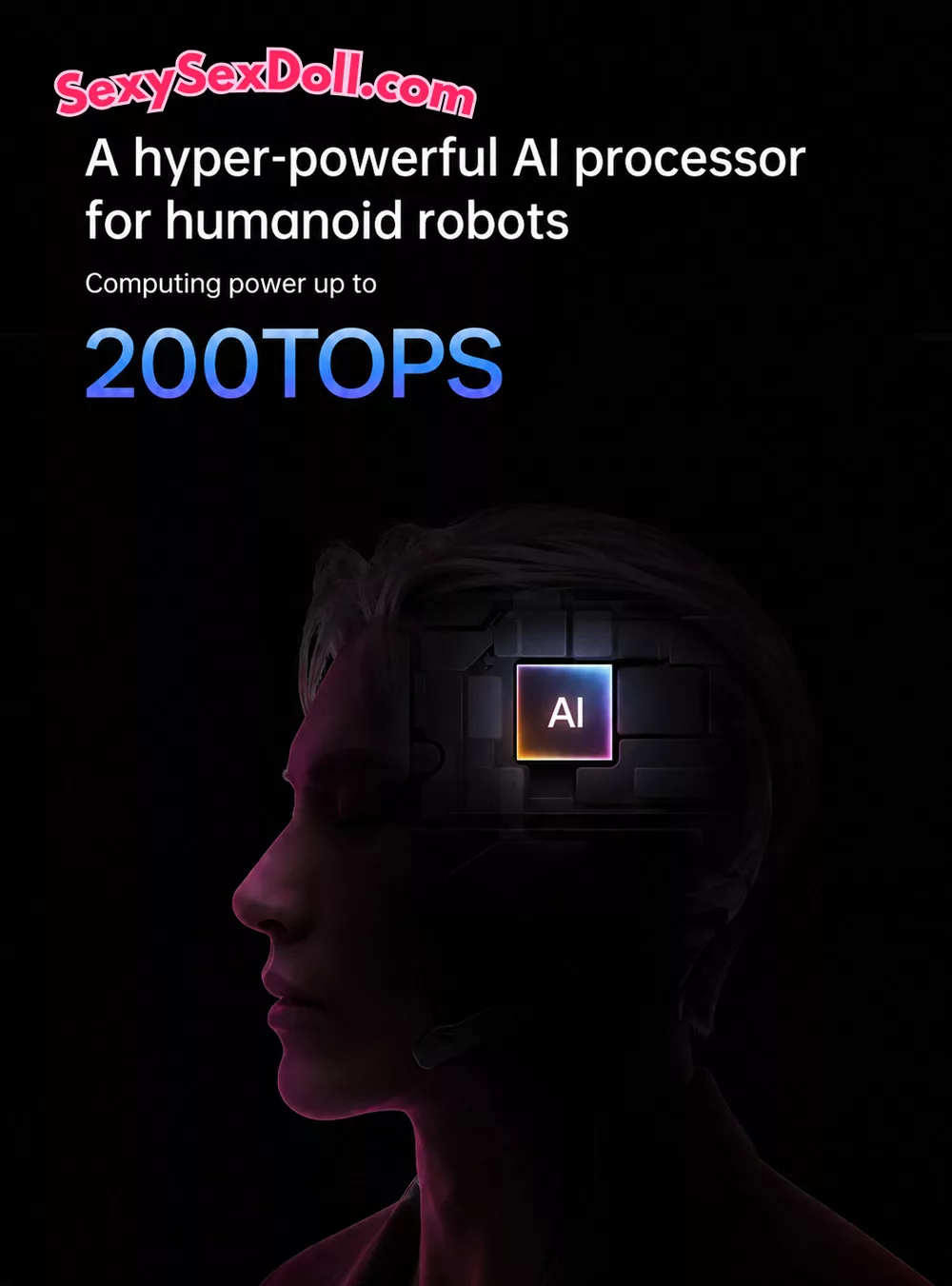
The U1 is powered by what UBTECH describes as the world’s first emotion-aware LLM for long-term companionship, capable of identifying more than 20 fine-grained emotional states with over 90 percent accuracy. That claim deserves scrutiny. The emotion recognition claim should be treated as a company-reported metric — the source reporting does not describe the test set, operating conditions, or third-party validation behind the more-than-90-percent figure. We note this not to dismiss the technology — LLM-driven emotional response is genuinely impressive in 2026 — but because buyers in this market have been burned by overstatement before.
What is independently compelling is the response architecture. The system delivers reactions in approximately 500 milliseconds while supporting complex decision-making through AI models with hundreds of billions of parameters. A proprietary facial expression actuation system synchronizes speech and lip movements with less than 20 milliseconds of latency, producing more natural communication.
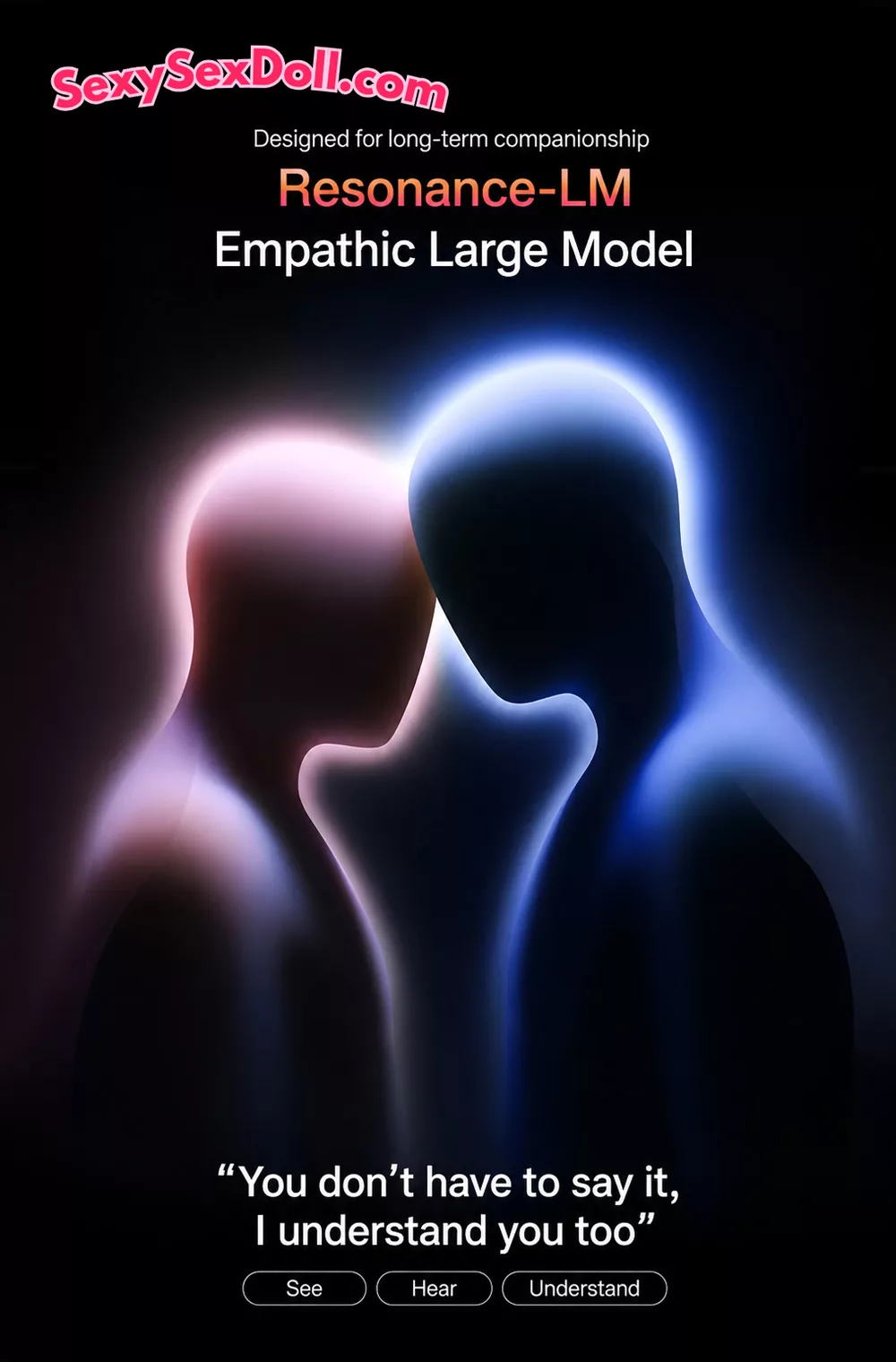
The platform also incorporates Agent Memory OS, a cross-temporal memory framework that enables persistent long-term interactions. A proactive care engine continuously interprets environmental context, allowing wake-word-free communication and context-aware responses. In plain English: the robot listens continuously, builds a memory of you over time, and adjusts how it responds based on your patterns — not just the current conversation. That is a meaningful leap beyond a static doll, and it’s the piece of this product we’ll be watching most closely as real-world delivery data comes in.
What This Launch Actually Signals for the Intimacy-Tech Market
UBTECH isn’t the only company reading these demographics. The company cited demographic trends in China, noting that more than 90 million adults live alone and 118 million older adults are classified as empty-nest seniors. These aren’t niche segments — they’re the structural driver behind an entire emerging category. Reuters noted that the announcement sparked discussion on Chinese social media about AI-powered “cyber boyfriends” and “cyber girlfriends.” The mainstream framing has shifted from “creepy tech curiosity” to “legitimate loneliness solution” almost overnight.
From our position as an authorized multi-brand retailer since 2016 with 851 verified Yotpo reviews at 4.7 stars, we’ve tracked a parallel conversation happening in the doll market for years. Buyers are increasingly interested not just in physical realism but in the feeling of a consistent, personalized presence. The U1 launch is the loudest signal yet that the robotics industry has heard the same thing — and is now spending at scale to compete for that buyer.
The financial scale of UBTECH’s industrial-to-consumer pivot underscores how serious this bet is. The company reported that revenue from its full-size embodied intelligent humanoid robot products and solutions reached 821 million yuan in 2025, more than 22 times higher than the previous year. The segment accounted for 41.1 percent of total company revenue, up from just 2.7 percent a year earlier. A company doesn’t redeploy that kind of momentum into a consumer category unless it believes the market is genuinely there.
The U1 isn’t competing with the dolls we sell today. It’s competing with where the doll market is heading over the next five years. The price gap is enormous — the entry-level U1 Lite starts at roughly $17,650, a full order of magnitude above many premium silicone dolls — but the product philosophy is identical: a physical presence that adapts to you, remembers you, and stays. That’s the convergence point worth watching.
Doll vs. Robot: The Buyer’s Real Choice in 2026
Let’s be direct about what the UWORLD U1 is and isn’t, because the marketing language around it is doing significant work. The basic U1 can move its head, eyes, and mouth, and has a battery life of up to four hours — but it does not do housework or cooking, and its skills do not extend to the bedroom either. It is not designed to offer intimate relations, at least “for now,” UBTECH says. That last qualifier — “for now” — is doing a lot of heavy lifting, and it speaks to an industry trajectory that’s accelerating, not stalling.
For buyers comparing the U1 against a premium companion doll, the honest breakdown looks like this:
| Dimension | UBTECH UWORLD U1 (Robot) | Premium Companion Doll (e.g., WM, YL, SY, 6Ye, XTDoll) |
|---|---|---|
| Entry Price | ~$17,650 (Lite torso) / ~$35,000 (Pro full-body) | $1,200–$4,500 typical premium range |
| Physical Realism | Silicone skin with pores & fingerprints; reported “cold” to touch; 4-hr battery | Medical-grade TPE or platinum silicone; passive warmth retention; no battery dependency |
| Emotional Interaction | Active: LLM-driven conversation, emotion detection, persistent memory, wake-word-free | Passive: presence-based; moaning/sound heads available; AI integration emerging in select models |
| Customization | Appearance, personality; optional face/voice replication at Ultra tier | Extensive: head swaps, skin tone, body type, eye color, implanted hair, oral system upgrades |
| Intimacy Features | Not currently available (“for now” per UBTECH, Taipei Times) | Core feature set; Real Oral System, textured cavities, heat options |
| Mobility | Bipedal walking (flat indoor surfaces), autonomous navigation | Poseable skeleton; standing feet / fixed positions depending on model |
| Availability | China delivery Sep 2026; international TBD | Ships globally now; weeks not months |
| Privacy | Local-first encryption, hardware-controlled; some scrutiny given regulatory environment | No data collection; entirely offline by nature |
The table makes something clear: these are not the same product, and they’re not serving the same buyer — yet. The consumer market for humanoid robots remains thin by shipment volume — cited IDC data puts global humanoid robot shipments at approximately 18,000 units in 2025, with less than 0.8% entering private homes and more than 90% concentrated in industrial settings. The doll market, by contrast, has been shipping direct-to-consumer at volume for years.
Where the U1 is genuinely ahead of anything in the current doll space is long-term adaptive memory. According to UBTECH, the system can analyze facial expressions, tone of voice, and speaking patterns to estimate emotional states and adjust conversations accordingly. When users appear stressed or unhappy, the robot can offer supportive dialogue or attempt to guide interactions in a more positive direction. No current doll — no matter how premium — does this proactively and autonomously.
Where These Two Worlds Are Converging — And What Buyers Should Do Now
The uncanny valley critique of the U1 is real and worth acknowledging. As Fast Company noted after attending the Shenzhen launch, the U1 sits deep in what’s known as the “uncanny valley” — because the closer a machine gets to looking human, the more its flaws stand out, triggering an automatic sense of revulsion in the brain, a byproduct of hundreds of thousands of years of evolution that makes us quickly notice anything that feels off. The illusion breaks during interactions. Critically, joint movements still give away the motors hiding beneath that skin, physical abilities are limited, muscles don’t move the way a human’s do, and its “emotional intelligence” is, at bottom, the product of pattern recognition and language-model prediction, not real feeling.
This is where premium companion dolls actually hold an unexpected advantage: they never tried to fool you into thinking they were human. A beautifully crafted silicone doll from XTDoll or 6Ye doesn’t trigger uncanny valley discomfort because it makes no claim to autonomous personhood. The aesthetic language is “idealized companion,” not “synthetic human.” That’s a psychologically safer landing for most buyers, and it’s something the robotics industry hasn’t fully reckoned with yet.
That said, the convergence is clearly coming. Michael Tam, Chief Brand Officer of UBTECH, stated that human-robot companionship represents a new approach to supporting mental well-being, and that companion robots have the potential to become an important new consumer category by providing personalized emotional support throughout different stages of life. The direction is set. The question is timeline and price compression.
For the doll market specifically, the U1’s launch is an accelerant: it normalizes the idea of a physical synthetic companion with emotional AI, it attracts mainstream media attention to a category that benefits from normalization, and it puts competitive pressure on manufacturers to integrate conversational and memory AI faster. The brands we carry — WM, SY, YL, XTDoll, 6Ye, Starpery and others — are all watching this space. Expect the next generation of AI-integrated doll and robot models to close the gap meaningfully by 2027–2028.
For buyers navigating this moment, the practical answer is straightforward: if you want a physical, intimate, fully customizable companion you can order today and receive within weeks, the premium doll market is exactly where you should be shopping. If you’re fascinated by the adaptive-AI, long-term memory angle and have the budget and patience for an early-adopter product still proving itself in real homes, the U1 Pro is a genuine pioneer — just go in with realistic expectations about cold silicone, a four-hour battery, and company-reported emotion accuracy figures that await independent validation.
The UWORLD U1 is the most credible public signal yet that the intimacy-tech and companion-robot markets are merging. UBTECH has industrial engineering credibility, a real product, real pre-orders, and a mass-production roadmap. But “for now” it doesn’t offer physical intimacy, runs four hours on a charge, and costs the price of a car. Premium companion dolls from established manufacturers remain the smart buy for anyone who wants physical realism, deep customization, and full intimacy features — today, not in 2028. Explore the full range at our Robot & AI Doll hub to see where technology meets readiness right now.
What exactly is the UBTECH UWORLD U1 and how is it different from a sex doll?
The UBTECH UWORLD U1 is a full-size humanoid robot launched in June 2026 under UBTECH’s consumer brand UWORLD. It features silicone skin, 88 servo joints, a proprietary emotion-aware LLM, and a persistent memory operating system designed for long-term companionship and emotional support. Unlike a companion doll, it can walk on flat surfaces, hold sustained autonomous conversations, and adapt its responses based on your emotional state over time. However, it currently has no intimate physical features — UBTECH explicitly states the U1 is not designed for intimate relations “for now.” A premium companion doll, by contrast, is fully customizable physically, ships globally today, and is purpose-built to include physical intimacy features. The two products serve overlapping but distinct use cases.
What does the UBTECH U1 launch mean for people already buying companion dolls?
It’s a strong signal that the broader market is validating what doll buyers have understood for years: there is genuine, growing demand for physical synthetic companions. The U1’s 13,000+ pre-orders (company-reported) and the mainstream media coverage it attracted normalizes the category further, which tends to reduce purchase hesitation across the board. For current doll buyers, it also previews where AI integration is heading — persistent memory, proactive emotional response, wake-word-free interaction. Expect premium doll manufacturers to accelerate AI integration in response to competitive pressure from the humanoid robotics sector. Explore our current AI and robot doll collection to see what’s available right now.
Is the UBTECH U1 available internationally, and what does it cost?
As of launch, the UWORLD U1 is primarily marketed and sold in China, with early deliveries targeting mid-September 2026. International availability has not been officially confirmed. Pricing runs from 119,800 yuan (approximately $17,650) for the Lite semi-torso model to 990,000 yuan (approximately $146,000) for the Ultra full-body flagship, according to multiple reports including the South China Morning Post and Interesting Engineering. Third-party sources estimate the U1 Pro full-body at approximately $35,000 USD including delivery for international buyers — see our full UBTECH U1 price and where-to-buy breakdown for details, though official international pricing should be verified directly with UBTECH.
How does the U1’s emotional AI compare to what’s available in AI-integrated dolls today?
The U1’s emotion-aware LLM is significantly more advanced in the conversational and adaptive-memory dimension than what’s currently integrated into most companion dolls. UBTECH claims it can identify 20+ fine-grained emotional states, respond in approximately 500 milliseconds, and build a cross-temporal memory of interactions over time — all processed locally on-device. Current AI doll integrations tend to focus on voice interaction and basic response scripting rather than genuine adaptive memory. The honest caveat is that UBTECH’s accuracy claims are self-reported and not yet independently validated in real-world consumer conditions. What exists in the doll market today is more limited on the AI side but far superior in physical intimacy, customization depth, and immediate availability.
Should I wait for humanoid robots before buying a companion doll?
That’s a personal decision, but from a retail-insider perspective: a capable, priced-for-consumers humanoid companion robot with full physical intimacy features is still at minimum several years from mainstream availability. The U1 starts at ~$17,650 for a torso model with a four-hour battery, no intimate features, and China-only delivery. A premium silicone companion doll from established manufacturers like those in our catalog ships globally now, offers deep physical and aesthetic customization, and costs a fraction of the price. If the conversational AI dimension is important to you, keep an eye on our Robot & AI Doll collection, where manufacturers are actively closing the gap on interactive features. For doll head options that maximize facial realism and aesthetic customization today, browse our full doll heads collection.
Ready to Explore Companion Technology Available Right Now?
As an authorized multi-brand retailer since 2016 — with 851 verified Yotpo reviews at 4.7 stars — we carry the most AI-forward companion dolls and robot models from WM, SY, YL, XTDoll, 6Ye, Starpery, and more. No four-hour battery. No waiting until September.