

China’s Companion Robot Moment: What the UBTECH U1 Launch Means for Doll Buyers Right Now
When a publicly traded Chinese robotics company sells 13,000+ pre-orders for a silicone-skinned, emotion-aware humanoid robot—and backs it with a state directive to deploy AI companions nationwide—something structural has shifted in the intimacy-tech market. Here’s the inside view on what this moment actually means for buyers, for the brands we carry, and for where the convergence of humanoid robotics and premium companion dolls is heading next.

In This Analysis
What Just Happened—and Why It’s a Landmark Moment
On June 30, 2026, UBTECH Robotics launched the UWorld U1 series at a splashy event in Shenzhen—and the intimacy-tech world hasn’t stopped talking about it since. Chinese robotics company UBTECH launched a bold new consumer line under its UWORLD brand, unveiling the U1 series at a high-profile 2026 Global Launch Event in Shenzhen with the thematic tagline “Love is eternal.” The robots are life-sized, hyper-realistic humanoid robots designed as companions offering emotional support and everyday interaction, available in both male and female versions.
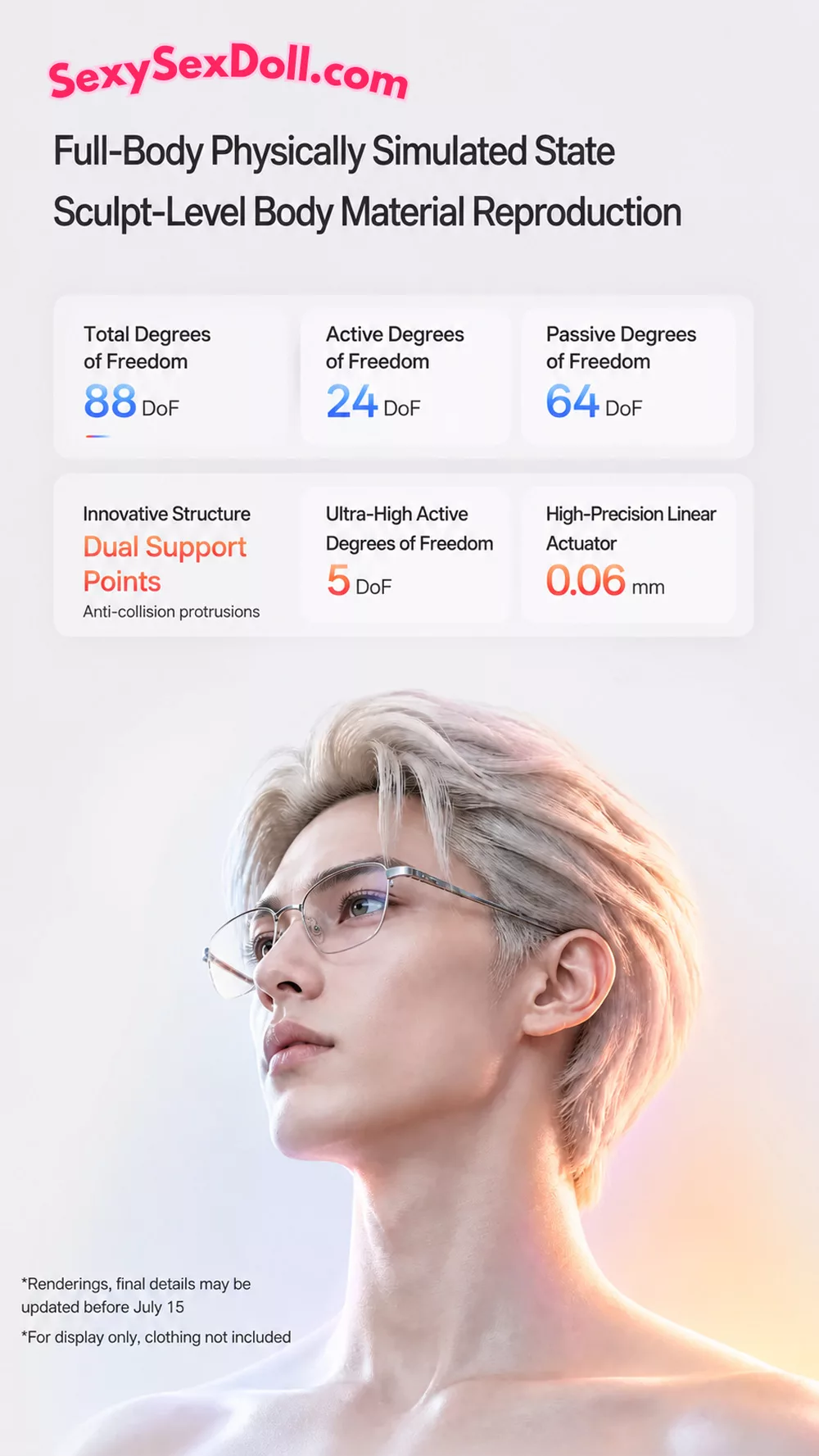
The demand signal was immediate. UBTECH says it had already received more than 13,300 pre-orders, with deliveries due to start in September, and the company’s goal for 2026 is a scaled production capacity of 50,000 bionic robots. That’s not a Kickstarter curiosity—it’s a mass-production commitment from a Hong Kong-listed company responding to a verified consumer queue.
| U1 at a Glance | Lite | Pro | Ultra |
|---|---|---|---|
| Form | Semi-torso | Full body | Full body, highest dynamics |
| Price (CNY) | ¥119,800 | ¥169,800 | ¥880,000 (F) / ¥990,000 (M) |
| Approx. USD | ~$17,600 | ~$25,000 (listed ~$35,000 intl. per Robots International) | ~$122,000–137,000 |
| Height / Weight | Female 168cm / 35.2kg · Male 183cm / 42kg | ||
| Battery | Up to 4 hours | ||
| Intimacy features | None — explicitly not designed for this use case | ||
| First deliveries | September 2026, China-first | ||
From our vantage point as an authorized multi-brand retailer since 2016, this launch matters not because humanoid robots are suddenly replacing what we sell—they’re not—but because it validates, at the highest commercial level, the exact need our customers have been telling us about for years: the desire for a lifelike, responsive, physical companion that feels designed around them.
The Policy Backdrop: Loneliness Is Now an Official Chinese Infrastructure Problem
The U1 didn’t appear in a vacuum. It’s the commercial output of years of Chinese state policy pointing toward exactly this product category: guidelines issued by the CPC Central Committee and the State Council on December 30, 2024 explicitly emphasize the development of humanoid robots, brain-computer interfaces, and AI technologies personalized for elder care.
The demographic pressure driving that policy is stark—and it reads clearest as a table:
| The Demographics Behind China’s Companion Push | Figure | Source |
|---|---|---|
| Citizens aged 65+ (end of 2023) | 216.76 million (15.4% of population) | Official statistics |
| Adults living alone | 90 million | UBTECH release |
| “Empty-nest” senior citizens | 118 million | UBTECH release |
| Young adults (20–39) living alone | 20+ million | Industry reporting |
These aren’t marketing numbers—they are the structural forces shaping both government directives and product roadmaps. China is among the first nations to set policy plans for humanoid robots that will provide companionship, monitor health, and may even resemble loved ones. When a government formalizes companion-robot deployment as national infrastructure, it accelerates manufacturing scale, reduces component costs, and—critically for Western buyers—speeds up the timeline for affordable technology to reach global markets.
The U1 Dissected: What the Tech Actually Does (and Doesn’t Do)
Let’s get specific, because the gap between the press-release version and the real-world version matters enormously for buyers evaluating the companion-tech landscape.
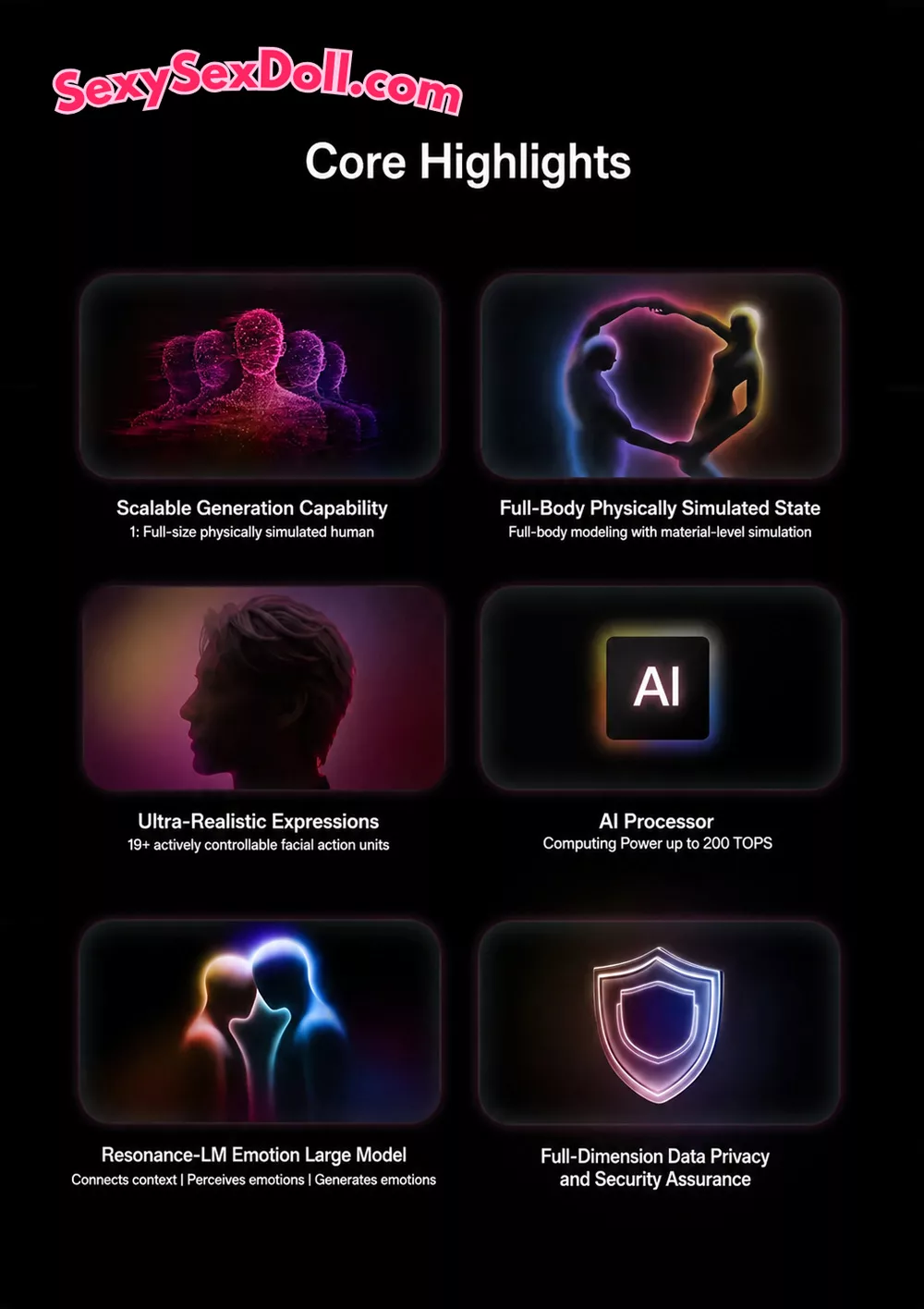
88 Degrees of Freedom
The U1 features 88 degrees of freedom, lifelike silicone skin, realistic hair, and an emotional AI engine that adapts to user mood and personality—more joint articulation than any comparable companion product.
Emotion-Aware LLM
The world’s first large-scale “emotional” AI model, recognizing more than 20 shades of emotion with over 90% claimed accuracy—reading facial cues, tone, and speech in real time.
On-Device Memory
The U1 Pro’s onboard Memory-Emotional AI Model holds conversations, recognizes moods, and stores personal memories locally with encryption—no cloud upload.
Human-Scale Proportions
Male 183cm / 42kg, female 168cm / 35.2kg—genuine adult-scale figures, not tabletop companions.
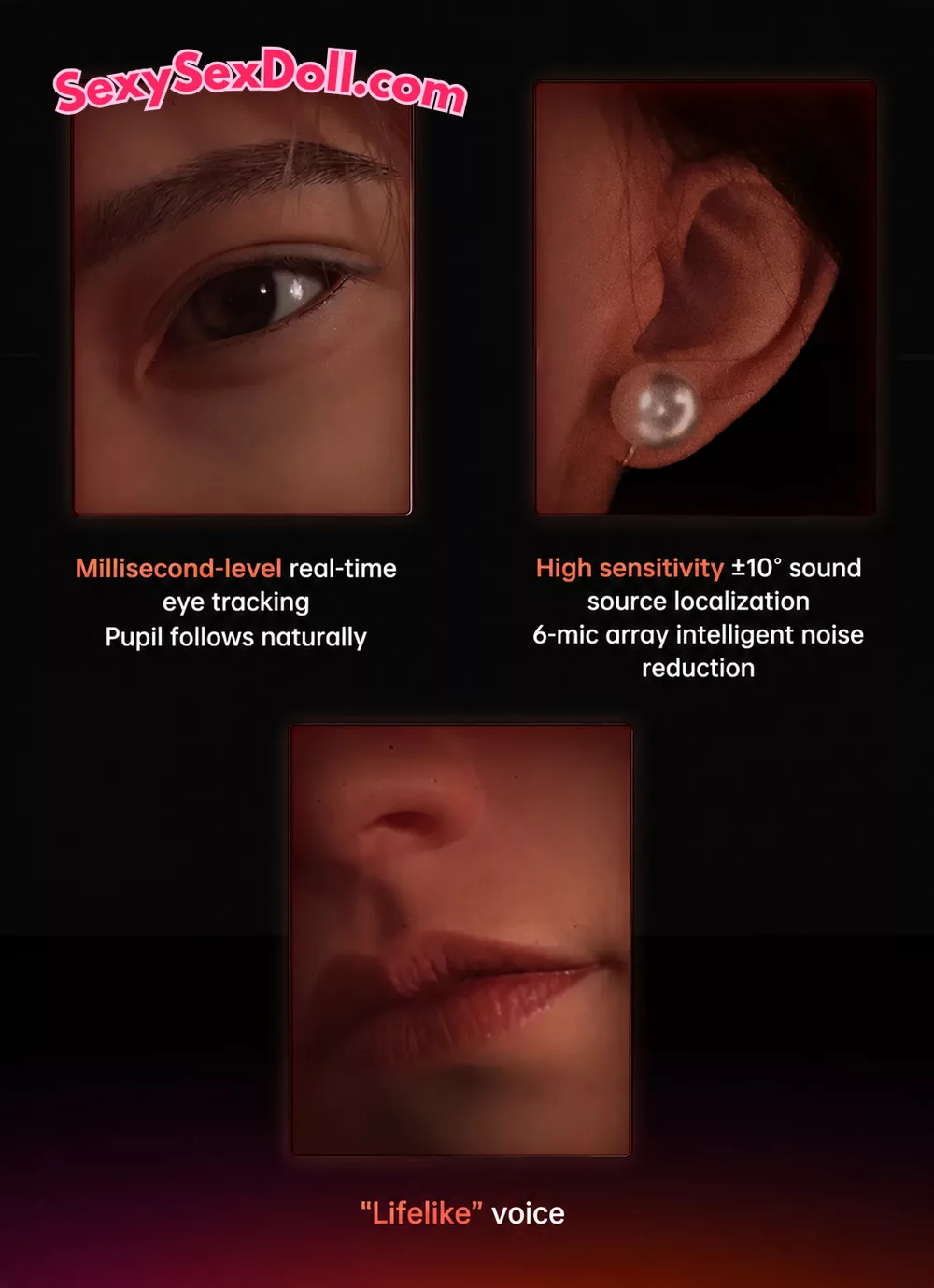
Now for the honest part. The basic U1 can move its head, eyes and mouth, and has a battery life of up to four hours—but it doesn’t do housework or cooking, and its skills do not extend to the bedroom, either. That four-hour battery ceiling is a real constraint for daily-companion use, and even the entry model sits firmly in luxury-purchase territory.
There’s also the uncanny valley question. Omdia’s Singapore-based chief analyst sees “value in a companion robot, albeit in a niche market” such as elderly care or mental wellness, but notes they “have to pass the ‘uncanny valley’ test”—and early observers report that real-world facial expressions can appear somewhat mechanical, with conversations carrying the stilted quality of current AI systems.
The Market Gap Buyers Need to Understand Right Now
Here is the central insight that the mainstream coverage is missing entirely: the U1 and premium companion dolls are not competing products—they are currently serving completely different price tiers and use cases, and one is far more mature than the other.
| Dimension | UBTECH UWorld U1 (Robot) | Premium Companion Doll (e.g., WM, YL, Starpery) |
|---|---|---|
| Entry Price (USD) | ~$17,600 (Lite torso) | $1,000–$4,000+ (full-body silicone) |
| Skin Material | Silicone exterior over metal/motor frame | Medical-grade silicone or TPE throughout |
| Physical Intimacy | Not designed for this use case | Purpose-built; anatomically detailed |
| AI / Interaction | Full LLM + emotion recognition; conversation-first | Optional AI heads/modules available; growing rapidly |
| Battery / Maintenance | 4-hour battery; complex motor servicing | No power requirements; TPE/silicone care routines |
| Customization | Cosmetic + personality (software-level) | Deep body, face, skin, eye, hair customization at order |
| Delivery Timeline | September 2026 (initial wave, China-first) | Available now, ships globally |
The U1’s own manufacturer is transparent about what it doesn’t do. While the U1 won’t be doing your dishes—it’s not designed for household chores—it is pitched as an antidote to loneliness, capable of holding conversations and providing emotional support. For buyers seeking physical intimacy, this gap is foundational, not a footnote. We covered exactly where that line sits in our full UWORLD U1 analysis.
What Doll Technology Delivers for Buyers Right Now
The brands we carry as an authorized multi-brand retailer since 2016—WM, 6Ye/Amor, SY, YL, Starpery, XTDoll and more—represent the most mature point in the physical-realism spectrum of companion products. While the U1 is still building toward its first delivery batch, these manufacturers have been refining silicone formulation, skeleton articulation, and AI integration for years.
Manufacturers are developing conversational AI, facial expression systems, voice interaction, emotional response capabilities, customizable personalities, self-heating features, and app-controlled functionality—and AI-enabled formats are forecast to grow at a 12.43% CAGR through 2031 as buyers show stronger interest in memory, interaction, and companion-style features. Our Robot & AI Doll collection already represents the leading edge of this convergence.
Editor’s Picks: The Companion Tech You Can Order Today
These are real, in-catalog models from the brands driving the doll side of the convergence. SY Doll pairs premium silicone heads (including Real Oral System functionality) with expressive hybrid builds:
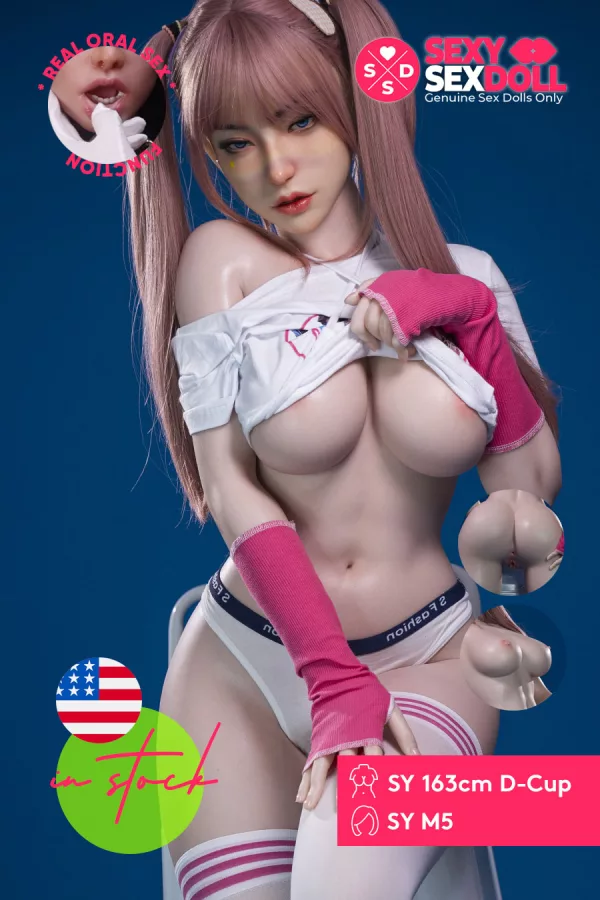
SY Doll · Head M5 (ROS)
Real Oral System · US in-stock
View Details →-9-600x900.webp)
Amarilis · Head S15
160cm · C-cup · Hybrid
View Details →2-7-600x900.webp)
Zahara · Head S22
160cm · C-cup · Hybrid
View Details →-12-600x900.webp)
Araceli · Head S6
170cm · D-cup · Hybrid
View Details →XTDoll is the brand pushing full-silicone realism hardest—the same material philosophy UBTECH borrowed for the U1’s skin:

Vienve · Head XT-12B
163cm · F-cup · Full silicone
View Details →
Isolde · Head XT-20-C
150cm · D-cup · Full silicone
View Details →
Yaretzi · Head BYX4-A
150cm · D-cup · Full silicone
View Details →
Zephyra · SY Doll
Compact · TPE
View Details →Every model above ships globally now—no September waitlist, no four-hour battery. Browse the complete lineup at the SY Doll and XTDoll brand hubs, or start with Real Oral System technology for the most advanced physical interaction available today.
The Convergence Roadmap: What Western Buyers Can Expect Next
The most important forward-looking question isn’t “will robots replace dolls?” It’s: “how fast will the technology from China’s robotics cluster filter into the companion products we already sell?” The answer, based on supply-chain dynamics, is: faster than most people expect. Within a 100-kilometer radius of central Shenzhen, a robotics company can source motors, harmonic drives, sensors, and custom PCBs with first samples delivered within a week—and that same ecosystem is where WM Doll, Starpery, and every brand in our lineup sources components.
| Convergence by the Numbers | Figure | Source |
|---|---|---|
| Chinese humanoid robot manufacturers (2025) | 140+ companies, 330+ models | Ministry of Industry & IT |
| China humanoid robot market, 2025 → 2030 | $0.40B → $2.80B (47.6% CAGR) | Market projections |
| Global companion doll market (2025) | $6.6B (9.3% CAGR to 2035) | Industry estimates |
| AI-enabled doll formats growth | 12.43% CAGR through 2031 | Industry forecasts |
| Chinese robot cost advantage vs. foreign models | 20%+ cheaper on average | Morgan Stanley |
TrendForce observes that China’s ultra-bionic humanoid robots are expanding into companionship, entertainment, elder care, and digital content—with competition shifting from hardware performance to emotion AI and overall user experience. That’s precisely the direction premium companion dolls have been moving: from passive figures toward interactive, personality-layered, emotionally responsive companions. These are two growth curves heading toward each other, and the manufacturers we carry sit squarely at the intersection.
Frequently Asked Questions
Is the UBTECH U1 available for Western buyers to purchase right now?
Pre-orders opened in China via JD.com, with deliveries initially targeted for September 2026 and primarily aimed at the domestic Chinese market. According to Robots International, the U1 Pro is listed at US$35,000 including worldwide delivery, though availability and support infrastructure outside China remain limited at launch. For buyers in North America or Europe looking for an immediately available, deeply customizable companion product, the AI-enabled dolls in our Robot & AI Doll collection ship globally right now—at a fraction of the cost.
What’s the actual difference between the U1 companion robot and a premium AI companion doll?
The core distinction is design intent and material experience. The U1 is engineered primarily for conversation and emotional interaction—it can walk, talk, and recognize moods, but it runs on a 4-hour battery and is explicitly not designed for physical intimacy. Premium companion dolls from the brands we carry are purpose-built for physical realism: full-body anatomical detail, premium silicone or TPE skin throughout (not over a motor chassis), deep customization at order, and no power dependency. AI interaction modules are increasingly available as add-ons. The two categories are converging, but today they serve meaningfully different primary needs.
Will China’s government push for companion robots drive down prices for Western buyers?
Very likely, yes—and the mechanism is already in motion. According to TechCrunch, China’s hardware supply chain allows companies to iterate far faster than Western competitors, and Morgan Stanley has noted that locally made components have already made Chinese robots 20% or more cheaper than foreign equivalents on average. As this supply-chain density feeds innovation in AI modules, expressive servo-driven faces, and voice systems, those components filter into the companion-doll products we carry—which is why brands like 6Ye and XTDoll keep delivering improving AI-integration features without dramatic price increases.
How does the “uncanny valley” problem affect companion robots vs. companion dolls?
The uncanny valley describes the discomfort that arises when something is almost human but not quite—the closer to human, the more unsettling any imperfection becomes. Omdia’s chief analyst has specifically noted that the U1 must pass this test for mass market acceptance, and early reviewers have observed that real-world expressions can appear mechanical. Premium companion dolls occupy a different aesthetic register: they don’t attempt full autonomous humanoid motion, so the realism bar is sculptural and tactile rather than behavioral. This is why buyers consistently report high satisfaction with premium silicone dolls—the expectation is different, and it’s being met and exceeded.
What should I look for if I want the closest thing to AI companionship in a doll right now?
Focus on three things: (1) an AI-enabled head with voice interaction and emotional response capability—see our Robot & AI Doll hub for current options; (2) full-body premium silicone construction for the most lifelike tactile experience, including features like Real Oral System technology; and (3) deep pre-order customization—skin tone, face sculpt, body proportions, eye color, and more. As an authorized multi-brand retailer since 2016 with 851 verified Yotpo reviews at 4.7 stars, we can guide you to the right configuration across WM, Starpery, SY, YL, XTDoll, and our full brand lineup.
The Future of Companion Tech Is Already Here
While humanoid robots make headlines, the most advanced AI-enabled companion products available to Western buyers are in our catalog right now—backed by authorized brands, global shipping, and 851 verified Yotpo reviews at 4.7 stars.