

Part of our sex doll buying guides — honest advice from an authorized retailer since 2016.
Ebony Sex Doll Buyer’s Guide: Skin-Tone Craft, Material Realities & How to Choose Right
Whether you searched “ebony sex doll,” “black sex doll,” or “African American sex doll,” you are looking for the same thing: a deep-tone sculpt that looks exactly as it does in the product photos once it arrives. This guide tells you the technical truths that competitor pages skip — pigment consistency, hybrid colour matching, photography vs. reality under home lighting, and the maintenance routine that keeps deep-tone TPE looking its best.
What Buyers Actually Mean When They Search “Ebony Sex Doll”
The three most common search phrases — ebony sex doll, black sex doll, and African American sex doll — are used by the same buyer to mean the same thing: a full-size premium doll sculpted and pigmented in a medium-brown to deep-tone skin range. They are not separate product categories. Using different words on different pages fragments the very audience you are trying to serve; a single authoritative guide captures all three.
In the sex-doll market, “ebony” describes a skin-tone and sculpt aesthetic, not a separate manufacturer or brand. Authorized brands such as WM, SY, YL, 6Ye, Irontech, and Starpery each offer tone options within their respective catalogues — some labelled “tan,” “brown,” “dark,” or given numerical tone codes. “Ebony” is simply the umbrella retail term buyers use to find those options.
What buyers are really asking when they land on this keyword is usually one of four sub-questions: Which brands actually make this tone well? Will it look the same at home as in the photos? How do I match a silicone head to a TPE body in a deep tone? And what extra maintenance does a darker-coloured TPE surface need? This guide answers all four.
3-Tier Decoder: What You Get at Each Level
Deep-tone dolls span a wide range of build quality, source accountability, and price. The table below cuts through the noise.
| Tier | What You Get | Who It Suits | The Trade-Off |
|---|---|---|---|
| Tier 1 — Full Silicone Deep Tone Premium |
Intrinsic pigment locked into the silicone matrix during casting; near-uniform colour across all body regions; finest surface micro-texture; resists staining and does not absorb external pigment. Tone remains stable long-term under correct storage. | Buyers who want the most faithful, stable representation of a deep skin tone and are prepared to invest accordingly. Best choice where colour accuracy is the primary criterion. | Higher investment, firmer feel than TPE, heavier per cm of body length. Full silicone in a true deep tone requires precise batch control — quality varies between brand runs, so authorized sourcing matters. |
| Tier 2 — Hybrid (Silicone Head + TPE Body) Mid-Range |
Silicone face with fine-detail painting; softer TPE body with internal colorant plus surface blushing. Best of both materials in one build. Tone code must be matched deliberately between head and body — this is the most common regret factor in this category. | Buyers who want facial realism approaching full silicone, with the softer body feel of TPE. The sweet spot for most buyers who prioritise a realistic face sculpt in a deep tone. | Head and body are cured from different materials in different batches. On deep tones, even a slight mismatch is clearly visible. Always order head and body together and confirm tone codes before checkout. |
| Tier 3 — Full TPE Deep Tone Entry–Mid |
Body-wide soft TPE; internal colorant blended into compound before casting plus surface blushing at joints and features. Pigment consistency across seam and joint areas is the key variable — this is where unauthorized or low-grade sources fall down most visibly. | First-time buyers entering the deep-tone category; buyers who prioritise softness and value. Excellent results are achievable from authorized brands with documented QC processes. | TPE is porous and can absorb external pigment (dark clothing staining). Surface requires renewal powder every 2–3 weeks; over-application leaves white residue that is highly visible on dark tones. See Maintenance section. |
The Craft Realities of Deep Skin Tones — What No Other Guide Covers
Deep-tone dolls involve specific engineering challenges that lighter-tone sculpts do not. Understanding these realities before you buy prevents the most common post-delivery disappointments.
① Pigment Consistency in Casting
Deeper tones require significantly higher pigment concentrations in the base compound. At those concentrations, any variation in mixing, pour temperature, or batch ratio produces visible tonal differences — especially at seam lines, gluing points, and joint areas where material meets material. On a pale sculpt this discrepancy is nearly invisible; on a deep tone it shows clearly. This is precisely why authorized-brand sourcing matters more in this category than in any other: documented QC processes measure colour uniformity against a reference standard before the doll ships.
② Photography vs. Reality Under Home Lighting
Studio product photography uses high-CRI lights at high brightness levels that lift and saturate deep tones, often making them appear richer, slightly warmer, and more luminous than they look in a normally lit bedroom or living room. Under standard home ambient lighting, the same doll reads darker and more matte. This is not a defect — it is physics. Set your expectation to the home-lighting version, not the product-shot version, and you will be satisfied. If you can, ask your retailer for unedited quality-check photos taken under neutral light before shipping.
③ Head–Body Colour Matching on Hybrids
A silicone head and a TPE body are cured in different factories, from different base compounds, in separate production batches. Even when both are ordered to the same tone code, the optical output differs because silicone and TPE have different levels of translucency and light absorption. On light tones this mismatch is easy to overlook; on deep tones it is immediately apparent at the neck join. The fix is simple: order head and body from the same brand and same production run wherever possible, confirm tone codes explicitly with your retailer, and request QC photos that show the joined doll before shipping.
④ Maintenance Visibility on Dark TPE
TPE needs powdering every 2–3 weeks to manage surface tack. Standard renewal powder (cornstarch or unscented talcum) is white. On a deep-tone TPE body, over-application or uneven buffing leaves a clearly visible white residue — something that goes unnoticed on lighter sculpts. The correct routine: use significantly less powder than you would on a pale doll, apply in thin sections with a clean powder brush, and buff thoroughly with a soft microfibre cloth before the powder sets. Spot-test any repair or patching compound on an inconspicuous area first — colour-matched compounds are harder to formulate for deep tones and visible mismatches are common.
The Five Regret Factors in This Category
These are the mistakes that generate the most post-purchase disappointment specifically for deep-tone doll buyers. Read each one before you order.
Expecting the Product-Photo Tone
Studio lighting lifts and warms deep tones. Your home lighting will render the doll darker and more matte. This is normal — not a defect.
Head–Body Tone Mismatch on Hybrids
Different materials read differently at the neck join. On deep tones the gap is obvious. Always confirm tone codes and request joined QC photos.
Over-Powdering Causes White Residue
White renewal powder is highly visible on dark TPE. Use less, apply in sections, buff thoroughly. Never skip the buffing step.
Repair Compound Colour Mismatch
Standard TPE repair kits are formulated for mid-tones. Deep-tone colour matching is harder; always spot-test any patch product first.
Assuming All Brands Offer All Tones
Deep-tone options vary by brand and model. Not every sculpt or body comes in every tone. Always verify tone availability on the specific product page before ordering.
Material Comparison: TPE vs Silicone vs Hybrid — Evaluated for Deep Tones
| Criterion | Full TPE | Full Silicone | Hybrid (Silicone Head + TPE Body) |
|---|---|---|---|
| Pigment method | Internal colorant + surface blushing | Intrinsic pigment locked into silicone matrix; layered surface work | Silicone head: intrinsic; TPE body: internal + blushing — different optical output at join |
| Tone consistency | Moderate — seams & joints risk tonal variation; QC-dependent | High — intrinsic pigment is uniform throughout cast | Variable — excellent within each part, but head-body join needs deliberate code matching |
| Staining risk | Higher — TPE is porous; dark fabrics transfer pigment; avoid dark clothing contact | Lower — silicone resists external pigment absorption | Body: same risk as TPE; head: low (silicone) |
| Powder maintenance | Every 2–3 weeks; white residue highly visible on dark tones if over-applied — buff thoroughly | Less critical (every 4–6 weeks if at all); residue less visible on matte silicone | Body needs regular powdering; silicone head does not |
| UV / ageing | More susceptible to UV-driven pigment degradation; store out of direct light | More UV-stable; intrinsic pigment degrades more slowly | Mixed: silicone head holds colour better; TPE body more light-sensitive |
| Surface feel | Softer, more elastic, warmer tactile response | Firmer, higher surface detail, holds micro-texture crisply | Best of both: realistic face detail; softer body feel |
| Ideal buyer | First-time buyers; value-conscious; prefer softness | Colour-accuracy priority; long-term collectors | Face-realism priority; comfort buyers; most popular mid-to-premium choice |
Browse our full collection of doll heads — many available in deep-tone options — at the Doll Heads collection. For a full-catalogue browse across every skin tone and body type we carry, visit the SexySexDoll.com homepage.
The Deep-Tone Spectrum: What Brands Actually Offer
The terms “ebony,” “black,” and “dark” are retail shorthand for what is actually a continuous spectrum of pigmented tone options. The table below describes what you will encounter across authorized brands — not as marketing language, but as a practical reference for ordering conversations.
| Tone Band | Common Brand Labels | Pigment Complexity | Consistency Risk at Seams | Maintenance Note |
|---|---|---|---|---|
| Light Brown / Tan | “Tan,” “Wheat,” “Light Caramel,” numeric codes in the 1–2 range on brand scales | Low–moderate | Low | White powder residue rarely visible; standard routine |
| Medium Brown | “Brown,” “Medium Tan,” “Mocha,” mid-range numeric codes | Moderate | Moderate | Light powder application; buff fully before setting |
| Deep Brown | “Dark,” “Deep Brown,” “Cacao,” upper numeric codes | High | Moderate–High | Minimal powder; careful section-by-section buffing; spot-test repairs |
| Deep Ebony / Dark | “Ebony,” “Dark Brown,” “Black,” highest numeric tone codes — not universally available across all models | Very High | High | Least powder of any tone; thorough buffing mandatory; UV storage protection essential; confirm availability per model before ordering |
Recommended Dolls by Buyer Type
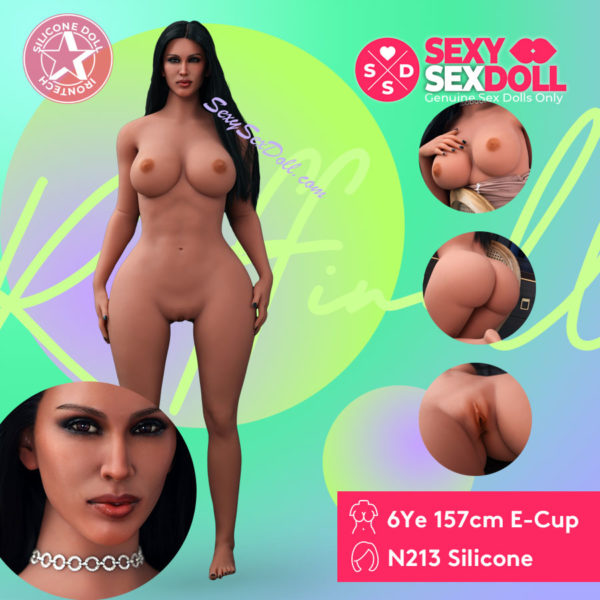
Full Silicone — Highest Tone Fidelity
For buyers where colour accuracy and long-term pigment stability are the primary criteria. Intrinsic silicone pigmentation produces the most consistent deep tone across the entire sculpt, with no powdering residue risk and superior stain resistance. Confirm your chosen tone code is available for the exact model before ordering.


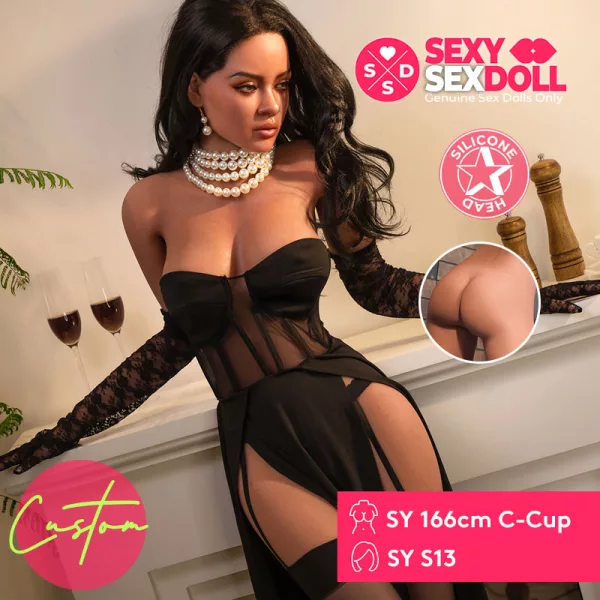
Hybrid Builds — Silicone Head, TPE Body
The most popular choice for buyers who want detailed facial realism in a deep-tone sculpt alongside the softer, warmer feel of a TPE body. These builds require tone-code verification at order time — head and body are ordered together, and our team confirms the match. The S8, S13, and S14 head sculpts have established track records in deep-tone configurations.
-9-600x899.webp)




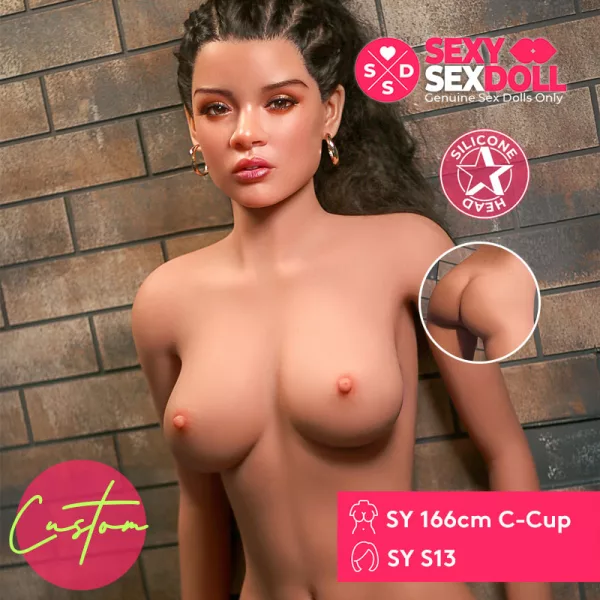
Full TPE — Ready-to-Ship & Value Builds
Full-TPE deep-tone dolls from authorized brands — including in-stock US-warehouse units that ship within days. Ideal for buyers who want a softer feel, a shorter wait, or a value-oriented entry point into the category. Remember the powdering and stain-prevention routine for TPE before your doll arrives.




Browse the full deep-tone collection — all brands, all builds — at the Black Sex Dolls category page. If you are comparing this category with other material or size choices, our BBW buyer’s guide covers the curvy-build landscape in similar depth.
Deep-Tone Maintenance Quick Reference
| Task | Frequency | Deep-Tone Specific Note |
|---|---|---|
| Gentle surface wash (mild, fragrance-free soap + warm water) | After each use | Pat dry with a soft microfibre cloth — no rubbing, which can lift surface blushing at joints |
| Renewal powder application | Every 2–3 weeks for TPE; less critical for silicone | Use significantly less powder than on pale tones. Apply in small sections with a powder brush; buff to invisibility with a clean microfibre cloth before powder sets. White residue on dark TPE is the most common visual complaint. |
| Full dry inspection (seams, joints, fingertips) | Monthly | Check for tonal variation at seam lines early — minor variation is normal, significant streaking may indicate QC variation that the retailer should know about promptly |
| Stain prevention — clothing & contact | Ongoing | TPE absorbs pigment from dark fabrics. Dress in light-coloured, colourfast clothing only, or use a barrier liner. Wash any new garment before dressing the doll. |
| UV / light exposure check | Ongoing / storage | Store away from all direct sunlight and windows. UV exposure causes uneven pigment degradation that is particularly visible on deep tones — a patchy appearance develops gradually and cannot be reversed. |
| Repair / patching | As needed | Always spot-test repair compound on an inconspicuous area first. Deep-tone colour-matching in standard repair kits is not guaranteed — a visible patch is worse than an unpatched minor scuff. |
Frequently Asked Questions
What is the difference between an ebony and a black sex doll?
Do dark skin tone dolls stain or fade differently?
Will the head and body match in colour on a hybrid doll?
Why does my doll look different from the product photos?
How do I apply renewal powder without leaving white marks on a dark TPE doll?
Browse the Full Deep-Tone Collection
Authorized multi-brand retailer since 2016 · 851 verified Yotpo reviews · 4.7 stars · WM, SY, YL, 6Ye, Irontech, Starpery & more

Related Articles
-

Sex Doll Technology in 2026: Heating, AI, Responsive Sensors & What Actually Works
-
BBW Sex Doll Buyer’s Guide: What to Expect & How to Choose | SexySexDoll
-
Lactating Sex Doll Buyer’s Guide: What to Expect & How to Choose | SexySexDoll
-
Pregnant Sex Doll Buyer’s Guide: Belly Size, Body Build & What to Know Before You Buy